london travel world
Wednesday, December 30, 2009
Friday, December 25, 2009
Thursday, December 24, 2009
Italian Christmas Music: Luciano Pavarotti - Tu Scendi Dalle Stelle
Italian Christmas Music: Pavarotti - Tu Scendi Dalle Stelle
Three Tenors Christmas Concert - Winter Wonderland
Italian Christmas Music - Carol of Drummer - Three Tenors
Italian Christmas Music: Luciano Pavarotti & Trisha Yearwood - Adeste Fideles
Italy would not be Christmas with out wonderful music. Here is Luciano Pavarotti & Trisha Yearwood - Adeste Fideles
Merry Christmas from WebVisionItaly.com to you and your family.
Sunday, December 20, 2009
Christmas in Italy - Art Exhibits & Italy Christmas Traditions
Chestnuts roasting on an open fire in Italy's piazzas full of families on an Italian passeggiata marks the season of Christmas in Italy. Enjoy this video to learn more about Italy's Christmas traditions and below a full list of art shows to visit if you find yourself on a Christmas in Italy vacation:
(ANSA) - Rome, December 18 - The following is a city-by-city guide to some of Italy's art exhibitions:
BRESCIA - Museo di Santa Giulia: Inca, Origins and Mysteries of the Civilisation of Gold; 250 artefacts, until June 27.
CASTELFRANCO VENETO - Casa del Giorgione: home-town show marking 500th anniversary of Giorgione's death; 130 works by Veneto painter and other Renaissance masters including Bellini, Raphael, Leonardo da Vinci, Titian; until April 11.
CATANIA - Palazzo Valle: Alberto Burri and Lucio Fontana; until March 14.
FERRARA - Palazzo dei Diamanti: Boldini In The Paris Of The Impressionists; show on Ferrara-born artist's 'beau monde' portraiture years from 1871 to 1886; until January 10.
FLORENCE - Uffizi: 'The Never Seen', annual Christmas display of works taken out of storage or recently acquired such as a portrait by Bolognese Renaissance master Amico Aspertini; 100 others include Dosso Dossi, Castagno, Salvati; until mid-January.
MILAN - Pinacoteca di Brera: Carlo Crivelli, San Domenico Triptych, works from Marche and loans from major world museums; until March 28.
- Palazzo Reale: Edward Hopper, 160 works; until January 24.
- same venue: Japan. Power and Splendour: 1569-1868, showcases 100 masterpieces on rare loan from Japan; until March 8.
- Triennale: Frank Gehry, projects since Guggenheim in Bilbao (1997); until January 10.
- same venue: Sandro Chia; until January 15.
- Castello Sforzesco: La Monaca di Monza; Hayez and other painters capture Manzoni's famed 'Promessi Sposi' character and the woman she was based on, Spanish aristocrat Marianna de Leyda; until March 21.
MONTECATINI TERME - Polo Espositivo Terme Tamerici: 19th century masters including Fattori, Lega, Signorini and Banti; until January 19.
NAPLES - six city museums: The Return of the Baroque, 350 works and 27 tours; until April 11.
PADUA - Museo degli Eremitani: Caravaggio, Lotto, Ribera, 50 works from the collection of art historian Roberto Longhi; until March 28.
- Palazzo Zabarella: Telemaco Signorini, show comparing 'macchiaioli' master with contemporaries like Degas, Van Gogh and Courbet; until January 31.
- Palazzo della Ragione: installation by Zaha Hadid; until March 1.
PASSARIANO - Villa Manin: The Age of Courbet and Monet; 134 works, until March 7.
PAVIA - Castello Visconteo: From Velasquez to Murillo, 50 masterpieces from the Hermitage; until January 17.
PERUGIA - Palazza Penna: 'Umbria Veloce' (Fast Umbria), show marking 100th anniversary of Futurism with paintings, self-portraits, posters, documents; until February 7.
PIACENZA - Fondazione Ricci Oddi: 19th-Century Tuscan Painting, Macchiaioli and beyond, 40 works; until May 2.
PISA - Palazzo Blu: Chagall And The Mediterranean; some 170 works; until January 17.
RIMINI - Castel Sismondo: From Rembrandt to Gauguin and Picasso; 65 masterpieces from Boston Museum of Fine Arts; until March 14.
ROME - Museo Nazionale Romano, Palazzo Massimo: The Secret of Marble, Painted Marble From Ascoli Satriano; 11 Ancient Greek works from the ancient city of Ausculum in Apulia including griffins returned by Getty Museum in 2007; until April 18.
- Galleria Nazionale d'Arte Moderna: Sandro Chia, 61 works by Transavanguardia artists; until February 28.
- Vittoriano: Africa, A New History; 80 works by 30 contemporary artists from 20 countries; until January 17.
- same venue: Dada and Surrealism: 500 works from world museums including Man Ray, Duchamp, Picabia, Wood, Moreau, Munch, Miro', Arp, De Chirico and Picasso; until February 7.
- Chiostro del Diamante: Boldini, De Nittis, Zandomenighi, other Italian painters in Paris; until March 14.
- Palazzo Incontro: Galileo show marking 400th anniversary of his first observations of the night sky; until January 6.
- Palazzo delle Esposizioni: Alexander Calder; until February 14.
- Galleria Borghese: Caravaggio-Bacon: ten works by Italian master compared to 20 by British painter; marks 400 years since Caravaggio's death; until January 24.
- Scuderie del Quirinale: Painting in Ancient Rome, The Colours of Empire; landscapes, still lifes, stage decor, street painting, portraits and mythological subjects from 1st century AD to late antiquity; until January 17.
- Capitoline Museums: Michelangelo's architectural works in Rome, 140 sketches, models and contemporary documents; until February 21.
TREVISO - Casa dei Carraresi: The Secrets of the Forbidden City, Matteo Ricci at the Ming Court; until May 9.
VERONA - Palazzo della Gran Guardia: Corot and Modern Art, Souvenirs and Impressions; 100 works in collaboration with Louvre; until March 7.
VIGEVANO - Castello Visconteo: Leonardo da Vinci's output during his time in Lombardy; 'virtual codex' on flying, botany, mathematics, weaponry, astronomy, engineering and architecture; until April 5.
Wednesday, December 16, 2009
Stag Weekends In Leeds: Rock Harder Than Any Other European City
Hello once again people of the world - hope you are all ok! It certainly feels like a long, long time since I last updated my travel blog and indeed, the main reason for this is that for the time being at least, my backpacking days are numbered. Yes, suffice to say I'm back in good old Blighty (if you don't know this is the slang term for Britain), back at work as an office boy and basically trying to save up my pennies once again for another exciting trip around the great cities that Europe and indeed the rest of the world may have to offer.
Of course, having said this I've realised having returned from my numerous excursions in far away lands that it's all too easy to forget how many fantastic cities that the UK has to offer in terms of nightlife and hot women and none more so than Leeds - the city some say (mostly people from Leeds admittedly!) is "the pride of Yorkshire". I've been lucky enough (or possibly unlucky enough going on the state of my health after previous such occasions) to recently be invited onto the stag do of a very good friend of mine - and as you may have guessed this is set to take place "oop north" as it were in the great city of Leeds. Many people seem to go abroad for stag nights these days, but call me old fashioned - I personally don't think it’s fair to inflict a bunch of drunken English lads onto the most beautiful, historic, and cultured cities in Europe.
For those of you who aren't from England, I feel I should point out that Leeds has quickly become THE place to go out and party in the north of England over the last few years and has arguably some of the best selection of clubs to make any stag do go off with a bang. Whether your tastes are for Dance music and the famous Gatecrasher club, funk and soul at the Hi Fi club or indie and rock nights at the famous Cockpit club then there are undoubtedly very few cities in the country better to take out your mates on a stag do. The locals seem to head down to the many bars on call lane but be wary of this as they only tend to take mixed sex groups. Don't let this put you off a stag party in Leeds though. Indeed, in my experience (and having enjoyed several English stag nights of other friends in the cities of Newcastle and Nottingham), Leeds stag parties simply rock like no other.
Don't forget too that before the hardcore drinking commences you are in a perfect location to enjoy some good team outdoor activities in the Yorkshire Dales - from paintballing to clay pigeons you are sure to find something to get the testosterone flowing. So if one of your mates is thinking of having his big night out in the UK - why not take my advice and get involved with a massive stag party in Leeds.
Of course, having said this I've realised having returned from my numerous excursions in far away lands that it's all too easy to forget how many fantastic cities that the UK has to offer in terms of nightlife and hot women and none more so than Leeds - the city some say (mostly people from Leeds admittedly!) is "the pride of Yorkshire". I've been lucky enough (or possibly unlucky enough going on the state of my health after previous such occasions) to recently be invited onto the stag do of a very good friend of mine - and as you may have guessed this is set to take place "oop north" as it were in the great city of Leeds. Many people seem to go abroad for stag nights these days, but call me old fashioned - I personally don't think it’s fair to inflict a bunch of drunken English lads onto the most beautiful, historic, and cultured cities in Europe.
For those of you who aren't from England, I feel I should point out that Leeds has quickly become THE place to go out and party in the north of England over the last few years and has arguably some of the best selection of clubs to make any stag do go off with a bang. Whether your tastes are for Dance music and the famous Gatecrasher club, funk and soul at the Hi Fi club or indie and rock nights at the famous Cockpit club then there are undoubtedly very few cities in the country better to take out your mates on a stag do. The locals seem to head down to the many bars on call lane but be wary of this as they only tend to take mixed sex groups. Don't let this put you off a stag party in Leeds though. Indeed, in my experience (and having enjoyed several English stag nights of other friends in the cities of Newcastle and Nottingham), Leeds stag parties simply rock like no other.
Thursday, December 10, 2009
Amazing Mazatlan - Mexico
try for this spot in mexico.. there is thousand destination either like this
Tuesday, December 1, 2009
Monday, November 30, 2009
Saturday, November 21, 2009
Popes and Olive oil
THE TUSCIA HAS ALWAYS BEEN A LAND OF POPES AND OLIVE OIL.
History and good food sit comfortably together in the Tuscia, as the northern part of Lazio is known; at its centre the mediaeval walled town of Viterbo: the city of the popes. It was here, in 1270, that the term which we now use for papal elections derives, (conclave) meaning “with key” i.e. locked in. After two years and nine months of deliberation the assembled cardinals had still not managed to elect a new pope, and so to help them along the burgesses of the town locked them inside the papal palace and reduced their diet to bread and water, eventually removing the roof to force a decision. Adjoining the Papal Palace is the arched loggia, overlooking the town on one side and facing piazza San Lorenzo, with its 12th century cathedral of San Lorenzo and its green and white banded tower on the other.


Winding alleyways and arches
An olive grower unloading his harvest
The fountain in the central piazza in Canino.

Not far away the village of Bomarzo balances on a ridge of tufo stone dominated by the 16th century Palazzo Orsini; a later addition to the Orsini real estate, and indicative of the wealth and influence held by this leading Tuscia family.

The park is inhabited by gigantic creatures carved from vulcanic rock, including an elephant grabbing a legionaire with its trunk, dragons, mythological gods, wrestling giants, an orc’s head whose gaping mouth you can walk into, and a house leaning over at a crazy angle. Later, after the death of his wife Giulia Farnese, the prince added a temple dedicated to her memory, which he likened to the dome of Santa Maria del Fiore in Florence. The park gave inspiration to Salvador Dali in his painting “The Temptation of Saint Anthony.”

Of course no region of Italy lacks its local wines, and among many fine wines from Tuscia perhaps the best known is the Est! Est!! Est!! from Montefiascone. Legend has it that in 1111 a bishop travelling to Rome in the entourage of Henry V of Germany sent his servant ahead to reconoitre the places with the best wine. He was to write “Est” (This is it) on the door of the inns selling good wine. Arriving in Montefiascone he so enjoyed the wine there, and not knowing any other way to express his appreciation, he simply wrote Est! Est!! Est!!!
I know, it's just so hard to find servants to send on ahead nowadays, so I can only suggest going anyway even without one.
Information
Nice To Meet You
E mail scrivi@nicetomeetyou.vt.it
www.nicetomeetyou.vt.it
Tel 0039 333 9522700 - 0039 333 7073786
I.A.T. (Ufficio Informazioni e di Accoglienza Turistica)
Piazza Verdi, 4/A - 01100 Viterbo
Tel.: 0039 – 0761 226666 FAX: 0039 0761 346029
Some restaurants well worth trying out:-
Ristorante Al Vecchio Orologio
Via Orologio Vecchio, 25
Viterbo
0761 305743
Serves typical local dishes, including aquacotta, a traditional soup, pasta with porcini mushrooms and risotto with nettles.
Meat dishes and freshwater fish caught from the two Tuschian lakes including perch and eel.
Locanda la Voltarella
Via Solferino, 25
Valentano
0761 422197
Small family run village trattoria. Serves lamb alla bujone, pastas and polenta.
Ristorante Taverna dei Frati di Luciano Ferruzzi
Via Callarozzo, 10
Soriano Nel Cimino
0761 749083
Lively restaurant in Renaisance palace with terrace overlooking the surrounding countryside.
Starters include olives and wild fennel, orange salad, hams, cheeses, salami, sutrine (crepe with sheeps’ cheese)
Meat and fish main courses.
Caffe Schenardi
Corso Italia, 11/13
Viterbo
0761 354860
www.caffeschenardi.com
Historic cafe in Belle Epoque style.
Gathering place for liberal intellectuals during the Italian Risorgimento
Pasticceria and gelateria, cocktail and wine bar, coffee and tea rooms.
View Tuscia in a larger map
History and good food sit comfortably together in the Tuscia, as the northern part of Lazio is known; at its centre the mediaeval walled town of Viterbo: the city of the popes. It was here, in 1270, that the term which we now use for papal elections derives, (conclave) meaning “with key” i.e. locked in. After two years and nine months of deliberation the assembled cardinals had still not managed to elect a new pope, and so to help them along the burgesses of the town locked them inside the papal palace and reduced their diet to bread and water, eventually removing the roof to force a decision. Adjoining the Papal Palace is the arched loggia, overlooking the town on one side and facing piazza San Lorenzo, with its 12th century cathedral of San Lorenzo and its green and white banded tower on the other.

The loggia at the Papal Palace
From this loggia Pope Clement IV excommunicated an entire army as it passed along the nearby Via Cassia, and by a cinematographic trick Orson Welles overlooked the Mediterranean sea in his film Othello.
Cobbled courtyards in the San Lorenzo district of Viterbo
The narrow cobbled alleyways in Viterbo’s mediaeval papal quarter of San Lorenzo echo the city’s heyday from the 12th to the 14th centuries, when successive popes abandoned the hard to govern and even hostile Rome for the safety of Viterbo, and the the Orsini and the Farnese families, who between them produced four popes, Celestine III, Nicolas III, Benedict XIII and Paul III, and countless cardinals, consolidated their families’ power through inter family marriages.

Winding alleyways and arches
The fertile farmland of the Tuscia, of vulcanic origin, makes it one of the most important areas in Italy for the production of olive oil. Olive groves abound all over the rolling hilly landscape. The watery late autumn sunlight picks out the soft green colour of the olive leaves, but other plantations of hazelnut and chestnut suffuse the whole scene with copper and gold.
In the town of Canino, twenty kilometres to the west of Viterbo, the olive harvest starts in November. Here they call olive oil “green gold,” a precious liquid that keeps the frantoi
(the olive oil refineries) working round the clock until almost Christmas. Here Italy’s largest (and Europe’s second largest) fratoio produces three hundred thousand kilos of extra virgin olive oil every twenty four hours in late November.
In the town of Canino, twenty kilometres to the west of Viterbo, the olive harvest starts in November. Here they call olive oil “green gold,” a precious liquid that keeps the frantoi
(the olive oil refineries) working round the clock until almost Christmas. Here Italy’s largest (and Europe’s second largest) fratoio produces three hundred thousand kilos of extra virgin olive oil every twenty four hours in late November.
An olive grower unloading his harvest
Many other smaller specialist refineries produce D.O.P. oils (denomiazione di origine protetta) a certification guaranteeing the product’s origine and production methods. The olives are picked and turned into oil within twenty four hours, and stone grinding methods that date back to Etruscan times are still used to seperate the flesh from the stone and to squeeze it into oil, alongside more modern centrifugal and flaying processes.
Canino prides itself as much for its olive oil as it does for its illustrious citizen of the early 19th century, Lucien Buonapart, Napoleon’s younger, and most revolutionary brother whose support had helped him become First Consul. In keeping with his strong republican views and not wishing to become king of a conquered country like Napoleon’s other brothers, he exiled himself to Canino in 1808, leaving only once, to help his brother during the hundred days. After being captured by the Piedmont army following Waterloo, he returned to Canino, thanks largely to the intervention of Pope Pius VII, who made him Prince of Canino. A title which given his anti imperialist views he never felt comfortable with. His tomb is in the Buonapart chapel in the church of the Apostles Andrea and Giovanni.
The fountain in the central piazza in Canino.
At Soriano nel Cimino the pastel coloured houses clamber up the steep sides of the town to the feet to the "rocca" the castle Orsini, and its impressive rectangular keep, from where on a clear day the Sabine moiuntains are visible more than sixty miles away. All around the castle narrow lanes and alleyways wind and twist, sometimes opening onto a tiny unexpected piazza.

The "rocca" of Soriano nel Cimino
If the only time you ever buy chestnuts is from a man on the corner with a brazier then they might seem a pretty ordinary dish, but every October in Soriano they celebrate its importance to the local economy and cuisine. More than a village fete, though of course stalls serving chestnut based dishes aren’t in short supply (you have to try the chestnut and chick pea soup) this is a time for the four rione, or neighbourhoods, to get even old scores in medieaval jousting and archery tournaments, all carried out in full period costume.Not far away the village of Bomarzo balances on a ridge of tufo stone dominated by the 16th century Palazzo Orsini; a later addition to the Orsini real estate, and indicative of the wealth and influence held by this leading Tuscia family.
Swirling autumn fog
In the late autumn afternoon fog streathily creeps over the low lying land leaving the town and nearby hills stranded like ships anchored off shore. Somewhere hidden in this fog is the Monster Park, or the Sacro Bosco, (Sacred Wood) the brain child of Prince Pier Francesco Orsini, who had it built in the mid 16th century by the architect Pirro Logorio (who worked on Saint Peter’s after the death of Michelangelo.)
The park is inhabited by gigantic creatures carved from vulcanic rock, including an elephant grabbing a legionaire with its trunk, dragons, mythological gods, wrestling giants, an orc’s head whose gaping mouth you can walk into, and a house leaning over at a crazy angle. Later, after the death of his wife Giulia Farnese, the prince added a temple dedicated to her memory, which he likened to the dome of Santa Maria del Fiore in Florence. The park gave inspiration to Salvador Dali in his painting “The Temptation of Saint Anthony.”

The entrance to the underworld through the gaping mouth of the Ogre, in the Sacred Wood at Bomarzo.
Local restaurants serve dishes that not only reflect the traditions and rich agriculture of the Tuscia, but also mix Roman flavours, Tuscan aromas and Umbrian simplicity. In particular the starters: risotto with nettle leaves, unleavened crepes with sheep’s cheese, gnocchi and porcini mushrooms, black olives with wild fennel. And main courses to fully satisfy the hungriest, like agnello a Bujone: lamb cooked with garlic, chilli oil and rosemary, probably introduced by French zuave papal troops stationed in Valentano in the 19th century, or a main course soup of lamb, potatoes and artichokes. Not to mention rabbit, pork (porchetta,) and game.Of course no region of Italy lacks its local wines, and among many fine wines from Tuscia perhaps the best known is the Est! Est!! Est!! from Montefiascone. Legend has it that in 1111 a bishop travelling to Rome in the entourage of Henry V of Germany sent his servant ahead to reconoitre the places with the best wine. He was to write “Est” (This is it) on the door of the inns selling good wine. Arriving in Montefiascone he so enjoyed the wine there, and not knowing any other way to express his appreciation, he simply wrote Est! Est!! Est!!!
I know, it's just so hard to find servants to send on ahead nowadays, so I can only suggest going anyway even without one.
Information
Nice To Meet You
E mail scrivi@nicetomeetyou.vt.it
www.nicetomeetyou.vt.it
Tel 0039 333 9522700 - 0039 333 7073786
I.A.T. (Ufficio Informazioni e di Accoglienza Turistica)
Piazza Verdi, 4/A - 01100 Viterbo
Tel.: 0039 – 0761 226666 FAX: 0039 0761 346029
Some restaurants well worth trying out:-
Ristorante Al Vecchio Orologio
Via Orologio Vecchio, 25
Viterbo
0761 305743
Serves typical local dishes, including aquacotta, a traditional soup, pasta with porcini mushrooms and risotto with nettles.
Meat dishes and freshwater fish caught from the two Tuschian lakes including perch and eel.
Locanda la Voltarella
Via Solferino, 25
Valentano
0761 422197
Small family run village trattoria. Serves lamb alla bujone, pastas and polenta.
Ristorante Taverna dei Frati di Luciano Ferruzzi
Via Callarozzo, 10
Soriano Nel Cimino
0761 749083
Lively restaurant in Renaisance palace with terrace overlooking the surrounding countryside.
Starters include olives and wild fennel, orange salad, hams, cheeses, salami, sutrine (crepe with sheeps’ cheese)
Meat and fish main courses.
Caffe Schenardi
Corso Italia, 11/13
Viterbo
0761 354860
www.caffeschenardi.com
Historic cafe in Belle Epoque style.
Gathering place for liberal intellectuals during the Italian Risorgimento
Pasticceria and gelateria, cocktail and wine bar, coffee and tea rooms.
View Tuscia in a larger map
Sunday, November 15, 2009
Duomo in Florence - Santa Maria del Fiore, Firenze
The Basilica di Santa Maria del Fiore is Florence's Cathedral. It is simply known as Il Duomo, and is located in the heart of Florence's centro storico. Il Duomo is known for its massive dome, which can be seen from the surrounding hills. Florence's Cathedral Santa Maria del Fiore aka Il Duomo is the fourth largest cathedral in the world.Florence Cathedral Il Duomo was begun in 1296 in the Gothic style to the design of Arnolfo di Cambio and completed structurally in 1436 with the dome engineered by Filippo Brunelleschi.
Giotto, who was the Florence city architect at the time, designed the Campanile, the bell tower, next to
Florence's Dome around 1334, when he was assigned to take voer overseeing all construction as the city of Florence architect. Although the giant Dome was part of the plan neither Cambio nor the great artist, architect & engineer Giotto had an idea how it would actually be built, as engineers in the early Renaissance did not have the experience to build such a Dome like the one atop the Pantheon in Rome, which was built by the Ancient Romans about 1500 years earlier.The Dome's architecture and design led in 1419 to a contest financed by Florence's Cosimo de Medici to find a great engineer who in the late medieval Italy had the vision to engineer the Dome to completion. The two main competitors were Lorenzo Ghiberti (famous for his work on the "Gates of Paradise" doors at the Baptistery) and Filippo Brunelleschi who was supported by Cosimo de Medici, with Brunelleschi winning and receiving the commission. Although Brunelleschi won, Ghiberti, appointed co-adjutator, mocked his plans and called them unfeasible. Brunelleschi, deeply offended, then pretended a sickness and left for Rome, leaving the project in the hands of Ghiberti. But Ghiberti soon had to admit that the whole project was beyond him. In 1423 Brunelleschi was back in charge and took over sole responsibility.
Brunelleschi had to invent special hoisting machines for hoisting large stones. These specially designed machines and brilliant masonry techniques were Brunelleschi's spectacular contribution to architecture. The ability to transcribe a circle on a cone face within the innermost double-shelled wall makes the self-sustaining "horizontal" arch construction possible, since geometrically, a circular plan is needed for such an erection.
It could be said that the word "creativity" and the end of the medieval period marking the beginning of the Renaissance occurred when men like Brunelleschi, Giotto, Da Vinci et. al challenged their own vision and imagination to accomplish architectural structures and works of art previously thought to be impossible. In fact, creativity was only associated with great minds who attained previously thought of impossibilities, unlike the late 20th century and early 21st century when rap music and inexplicable contemporary modern art are considered creative expression by some opinion leaders and art leaders.
Brunelleschi's Dome was in fact an enormous and revolutionary achievement. Much like the art of frecoes, which was lost around the time of the eruption of Vesuvius in the 1st century, the formula for concrete had long since been forgotten as well. Therefore, Brunelleschi would have to build the dome out of bricks, 7 million bricks in fact, with the inner shell providing a platform for the timbers that supported the outside brick structure. To show what his dome was to look like, Brunelleschi constructed a wooden and brick model of Il Duomo with the help of Donatello and Nanni di Banco, which model may be seen in the Museum Opera del Duomo, next door to Il Duomo. In gthe Museum Opera del Duomo you may also see Donatello's wooden sculpture of Mary Magdellan. His model served as a guide for the craftsmen, but was intentionally incomplete, as to ensure his control over the construction or as we would say today to preserve his intellectual property over the design of the dome.
Brunelleschi's solutions were ingenious and unprecedented: the distinctive octagonal design of the double-walled dome, resting on a drum and not on the roof itself, allowed for the entire dome to be built without the need for scaffolding from the ground, the first large dome ever to be built without centering. But, because the dome rested on a drum with no external buttresses supporting it, there could be no lateral thrusts at the base of the dome.
There are 463 steps to the top, which today travelers to Florence may climb to find some of the best panoramic views of the city. Other highlights include a cavernous interior, many wonderful frescoes, detailed ceiling mosaics that portray Dante's circles of Hell and stained-glass windows created by some of the greatest artists of the time, such as Vasari, Zuccari, Donatello, Uccello and Ghiberti.
The cathedral was consecrated by Pope Eugene IV on March 25, 1436 (the first day of the year according to the Florentine calendar). It was the first 'octagonal' dome in history to be built without a wooden supporting frame (The Roman Pantheon, a circular dome, was built in 117–128 A.D. with support structures). It was one of the most impressive projects of the Renaissance. During the consecration service in 1436, Guillaume Dufay's similarly unique motet Nuper rosarum flores was performed. The structure of this motet was strongly influenced by the structure of the dome.
Brunelleschi's ability to crown the dome with a lantern was questioned and he had to undergo another competition. He was declared the winner over his competitors Lorenzo Ghiberti and Antonio Ciaccheri. His design was for an octagonal lantern with eight radiating buttresses and eight high arched windows (now on display in the Museum Opera del Duomo). Construction of the lantern was begun a few months before his death in 1446. Then, for 15 years, little progress was possible, due to alterations by several architects. The lantern was finally completed by Brunelleschi's friend Michelozzo in 1461. The conical roof was crowned with a gilt copper ball and cross, containing holy relics, by Verrocchio in 1469. This brings the total height of the dome and lantern to 114.5 meters (375 ft). This copper ball was struck by lightning on 17 July 1600 and fell down. It was replaced by an even larger one two years later.
Piazza del Duomo
Firenze 50122 Italy
+39 055 215 380
info@duomofirenze.it
Open Hours10am-5.30pm Mon-Sat (10am-3.30pm 1st Sat each month); 1-5pm Sun
Click here for the Duomo Offical Website
For more about Florence travel and things to do in Florence visit Italian Broadcasting Company 24/7 Italy TV on demand at www.WebVisionItaly.com
Click Italy travel for Italy tour and Italy cruise video.
When you are ready for a Florence vacation visit Italian Tourism for Italy travel packages including air and hotel including the best deals on Amalfi Coast vacation packages, or for a Italy cruise click Rome cruise and Venice cruise Italy cruise listings. Italian Tourism has a variety of specials on a Florence vacations.
Sunday, November 1, 2009
Friday, October 30, 2009
Friday, October 16, 2009
The Lake District: The Best Scenic Holiday Destination In England
Wherever I have been on my travels the first thing someone says to me when i tell them I am from is England is "Are you from London?". The answer to this I have to say is a resounding "no" - and let me tell you there is far more to the UK that is worth visiting than it's illustrious and internationally renowned capital city. Indeed, if you are a traveler young or old or are even planning a family holiday or vacation and are thinking of visiting England for the first time but are is looking for an alternative to the usual site seeing trips to the city of London, why not instead look for a more serene and scenic alternative than the hustle and bussel of the capital and instead please give some special consideration to the incredible natural beauty of the Lake District - my favorite area of the British Isles. Situated in the North West of England in the county of Cumbria, the Lake District offers unique scenery quite unique to anywhere else in Europe and is an ideal location for any traveler who loves walking, hiking, cycling, camping or any other outdoor activity as the natural landscape offers the perfect backdrop for any such pursuit.

The Lake District's main claim to fame and also a key attraction for English people and tourists alike is that it has the highest point of altitude in all of England - Scafell Pike - and offers fantastic views of the surrounding area on a clear day. Although modest in its height by even European standards (standing at 978 meters tall) Scafell is an excellent place to take a walk if you ever get the chance to visit the North of England and forms one part of the famous national 3 peaks challenge. In spite of the fact that you may find the idea of climbing a mountain a rather daunting prospect, let me tell you that the beauty of the place is that it is very accessible to anyone who is reasonably fit and mobile and requires no specialist equipment to traverse other than a decent pair of hiking boots and a rain coat if you plan to visit in the summer months. although rain is to be expected and snow is likely near the summit, the paths to the top are very clearly laid out and frequented by many people of all ages every year.

The Lake District's main claim to fame and also a key attraction for English people and tourists alike is that it has the highest point of altitude in all of England - Scafell Pike - and offers fantastic views of the surrounding area on a clear day. Although modest in its height by even European standards (standing at 978 meters tall) Scafell is an excellent place to take a walk if you ever get the chance to visit the North of England and forms one part of the famous national 3 peaks challenge. In spite of the fact that you may find the idea of climbing a mountain a rather daunting prospect, let me tell you that the beauty of the place is that it is very accessible to anyone who is reasonably fit and mobile and requires no specialist equipment to traverse other than a decent pair of hiking boots and a rain coat if you plan to visit in the summer months. although rain is to be expected and snow is likely near the summit, the paths to the top are very clearly laid out and frequented by many people of all ages every year.
Labels:
backpacking,
england,
lake district,
uk,
walking
Monday, October 12, 2009
Enjoying the Sites and Sounds of Florence - Birthplace of the Italian Renaissance
The city of Florence is the capital of the Tuscan region of Italy and a city steeped in rich history and renaissance art. Lying along the river Arno, the city is a sheer delight to behold with its fantastic buildings and architecture. Florence is without question a “must see” for any young backpacker travelling across Europe - although it may not necessarily be the first city that springs to mind when you are planning your trip. Established in the year 59BC by the famous Roman Emperor Julius Caesar, it was originally an army camp for Roman army veterans. However, it is more famous as the birthplace of the Italian Renaissance during the middle ages with buildings constructed in the classical “Romanesque” style such as the Basilica Di San Miniato al Monte also helping to define the city of Florence and its architecture.
The main landmark of the city however is surely the fantastic Santa Maria del Fiore - a cathedral famed for its large dome - which remains open for visitors to the city to help them enjoy spectacular views of the city and its ornate buildings from up on high. Along the Arno is the Ponte Vecchio bridge which is also worth a visit for any tourist or traveler in Florence.
Genoa Italy - Great Italy Destination & Home of Christopher Columbus
Genoa Italy offers the Italy vacation traveler fine food, great museums, a lively city, and history which inlcudes the birthplace of Christopher Columbus, explorer and sailor who discovered the new world and changed Western history in 1492.Christopher Columbus is known as ‘the man who discovered America’, when he set sail from Europe trying to find a westward sea passage to the Orient. He instead landed in the Caribbean Sea dubbed The New World in 1492. Today is the anniversary of Christopher Columbus’ arrival in the Americas, which occurred on October 12, 1492 in the Julian calendar and October 21, 1492 in the modern Gregorian calendar.
Christopher Columbus was born in Genoa in 1451. His father was a weaver and small-time merchant, and Columbus had two more sib
lings. As a teenager, Christopher started his sea voyages traveling extensively. Columbus eventually made Portugal his base. It was from here, in Portugal that he attempted to gain royal patronage for a westward voyage to the Orient - his ‘Enterprise of the Indies’. No king or royal kingdom was ready to fund his project. He tried to convince them, but failed everywhere, except for the Spanish King Ferdinand and Queen Isabella who saw some promise in his proposal. Finally, King Ferdinand and Queen Isabella agreed to sponsor this historic sailing expedition, and on 3 August 1492, Columbus and his fleet of three ships, the Santa Maria, the Pinta and the Niña, set sail across the Atlantic. Some two and a half months later, they sighted land.
lings. As a teenager, Christopher started his sea voyages traveling extensively. Columbus eventually made Portugal his base. It was from here, in Portugal that he attempted to gain royal patronage for a westward voyage to the Orient - his ‘Enterprise of the Indies’. No king or royal kingdom was ready to fund his project. He tried to convince them, but failed everywhere, except for the Spanish King Ferdinand and Queen Isabella who saw some promise in his proposal. Finally, King Ferdinand and Queen Isabella agreed to sponsor this historic sailing expedition, and on 3 August 1492, Columbus and his fleet of three ships, the Santa Maria, the Pinta and the Niña, set sail across the Atlantic. Some two and a half months later, they sighted land. On 12 October, Columbus and a group of his men set foot on an island’s soil, what later became famously known as the Bahamas. However, Columbus thought that he had reached the Indies, so the sailors started calling the natives of that island as ‘Indians’. In all, Columbus made 4 voyages to the west, till his health degraded badly and he was unable to sail further. He died of arthritis and malaria. The anniversary of Columbus's 1492 landing in the Americas is observed as Columbus Day on October 12 in Spain and throughout the Americas, except that in the United States it is observed on the second Monday in October.

With his four voyages of exploration and several attempts at establishing a settlement on the island of Hispanila (Dominican Republic and Haiti), all funded by Isabella I of Castile. Columbus initiated the process of Spanish colonization, which foreshadowed general European colonization of the "New World."
Funding for Christopher Columbus expedition to The New World
Columbus sought financing from all the European Monarchs at the end of the 15th cent
ury. On 1 May 1486 Columbus presented his plans to Queen Isabella, who, in turn, referred it to a committee. Althought the committee rejected the plan, to keep Columbus from taking his ideas elsewhere, and perhaps to keep their options open, Ferdinand and Isabella, known as the Catholic Monarchs, gave him an annual allowance of 12,000 maravedia and in 1489 furnished him with a letter ordering all cities and towns under the the domain of Ferdinand and Isabella to provide him food and lodging at no cost.
Columbus sought financing from all the European Monarchs at the end of the 15th cent
ury. On 1 May 1486 Columbus presented his plans to Queen Isabella, who, in turn, referred it to a committee. Althought the committee rejected the plan, to keep Columbus from taking his ideas elsewhere, and perhaps to keep their options open, Ferdinand and Isabella, known as the Catholic Monarchs, gave him an annual allowance of 12,000 maravedia and in 1489 furnished him with a letter ordering all cities and towns under the the domain of Ferdinand and Isabella to provide him food and lodging at no cost.After continually lobbying at the Spanish court and two years of negotiations, he finally had success in 1492. Ferdinand and Isabella had just conquered Granada, the last Muslim stronghold on the Iberian peninsula, and they received Columbus in Cordoba, in the Alcazar castle. Isabella turned Columbus down on the advice of her confessor, and he was leaving town by mule in despair, when Ferdinand intervened. Isabella then sent a royal guard to fetch him and Ferdinand later claimed credit for being "the principal cause why those islands were discovered".
About half of the financing was to come from private Italian investors, whom Columbus had already lined up. Financially broke after the Granada campaign, the monarchs left it to the royal treasurer to shift funds among various royal accounts on behalf of the enterprise. Columbus was to be made "Admiral of the Seas" and would receive a portion of all profits. The terms were unusually generous, but as his son later wrote, the monarchs did not really expect him to return.
According to the contract that Columbus made with King Ferdinand and Queen Isabella, if Columbus discovered any new islands or mainland, he would receive many high rewards.
In terms of power, he would be given the rank of Admiral of the Ocean Sea and appointed Viceroy and Governor of all the new lands. He had the right to nominate three persons, fro
m whom the sovereigns would choose one, for any office in the new lands. He would be entitled to 10% of all the revenues from the new lands in perpetuity; this part was denied to him in the contract, although it was one of his demands. Additionally, he would also have the option of buying one-eighth interest in any commercial venture with the new lands and receive one-eighth of the profits.
m whom the sovereigns would choose one, for any office in the new lands. He would be entitled to 10% of all the revenues from the new lands in perpetuity; this part was denied to him in the contract, although it was one of his demands. Additionally, he would also have the option of buying one-eighth interest in any commercial venture with the new lands and receive one-eighth of the profits.Columbus was later arrested in 1500 and supplanted from these posts. After his death, Columbus's sons, Diego and Fernando, took legal action to enforce their father's contract. Many of the smears against Columbus were initiated by the Castilian crown during these lengthy court cases, known as the pleitos colombinos. The family had some success in their first litigation, as a judgment of 1511 confirmed Diego's position as Viceroy, but reduced his powers. Diego resumed litigation in 1512, which lasted until 1536, and further disputes continued until 1790.
Sunday, October 4, 2009
My Rome-Walking Tour Guide Maurizio Meyer walks Rome
My Rome-Walking Tour with Maurizio Meyer from old Rome centro storico Campo de' Fiori and Piazza Navona, walking through Rome's cobblestone streets passing Palazzo Farnese, walk down to Via Giulia cross Ponte Sisto over Tiber River west to Trastevere, and then climbing the Janiculum Hill for bird's eye views of Rome.
On the way Maurizio brings us to some off the beaten path Rome points of interest - each providing the Rome traveler verious bird's eye views of Rome.
Across the Tiber from Trastevere is Knights of Malta sovereign land for a look through the most famous keyhole in the world and the famous view of Vatican's St. Peter's Basilica Dome.
Maurizio's Rome tour also includes a jaunt to Monte Mario for a fabulous bird's eye view of all Rome the Tiber River and Ponte Milvio.
Maurizio's My Rome Walking Tour climb up Janiculum Hill from Trastevere offers all kinds of views of Rome's centro storico:
Rome Walking Map
Click this link for larger Rome Map: My Rome Walking Tour: Maurizio's Rome VIDEO Walking Tour of Rome Map
On the way Maurizio brings us to some off the beaten path Rome points of interest - each providing the Rome traveler verious bird's eye views of Rome.
Across the Tiber from Trastevere is Knights of Malta sovereign land for a look through the most famous keyhole in the world and the famous view of Vatican's St. Peter's Basilica Dome.
Maurizio's Rome tour also includes a jaunt to Monte Mario for a fabulous bird's eye view of all Rome the Tiber River and Ponte Milvio.
Maurizio's My Rome Walking Tour climb up Janiculum Hill from Trastevere offers all kinds of views of Rome's centro storico:
Rome Walking Map
Click this link for larger Rome Map: My Rome Walking Tour: Maurizio's Rome VIDEO Walking Tour of Rome Map
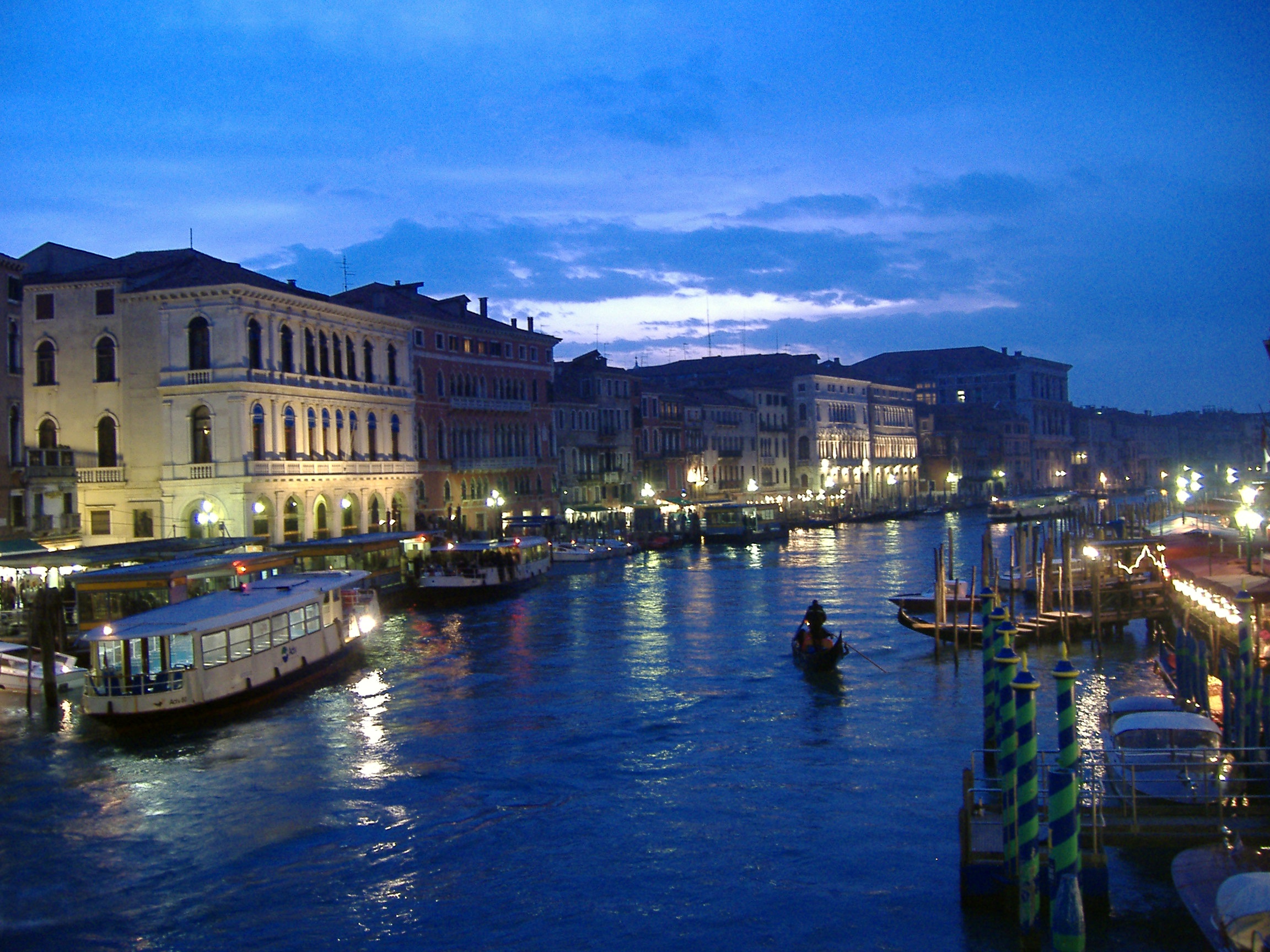
Enjoying The Beauty of Venice
Widely regarded as one of the most beautiful and physically unique cities in the entire world, the great city of Venice located in Northern Italy presents a travel destination quite like no other for any young backpacker travelling around Europe. Venice is of course most famous for its numerous rivers and canals that help to clearly define the unique and intriguing natural characteristics of this Italian Adriatic jewel.
The city itself is built upon 118 small islands that sit proudly amongst this intense intertwined network of waterways. When you picture the perfect ideal of Venice in your mind you always think of images of romantic boat trips on summer evenings - and travelling serenely along the waterways of the city by the numerous traditional gondolas that can be hired is surely a must have experience for any tourist or backpacker visiting the city and is also a great way of taking in the city's incredible architecture.
Indeed, it is these enduring images and traditions that not surprisingly have continued to make Venice a very popular holiday destination for young couples travelling around Europe.
The city itself is built upon 118 small islands that sit proudly amongst this intense intertwined network of waterways. When you picture the perfect ideal of Venice in your mind you always think of images of romantic boat trips on summer evenings - and travelling serenely along the waterways of the city by the numerous traditional gondolas that can be hired is surely a must have experience for any tourist or backpacker visiting the city and is also a great way of taking in the city's incredible architecture.
Indeed, it is these enduring images and traditions that not surprisingly have continued to make Venice a very popular holiday destination for young couples travelling around Europe.
Saturday, October 3, 2009
Missoni Sping Summer 2010 Fashion Show: Milan Fashion Week

Missoni Sping Summer 2010 Milan Fashion Show: Milan Fashion Week 2009
Milan Fashion Week wraps up after the Women's Spring Summer 2010 fashion shows from Italy's fashion designers. The world loves to see what's in store from famous Made In Italy fashion brands like Armani, Bottega Veneta, Cavalli, Dolce & Gabanna, Ferre, Ferretti, Gucci, Prada, Moschino & Versace.
WebVisionItaly.com brings you Milan Fashion Week, September 2009, where the runway models are strutting the fashion cat walks showing off the latest designs by Made in Italy brands. Here enjoy video of Missoni Spring Summer 2010 Fashion Runway.
Friday, October 2, 2009
Gucci Spring Summer 2010 Runway Video: Milan fashion Week
Milan Fashion Week wraps up after the Women's Spring Summer 2010 fashion shows from Italy's fashion designers. The world loves to see what's in store from famous Made In Italy fashion brands like Armani, Bottega Veneta, Cavalli, Dolce & Gabanna, Fendi, Ferre, Ferretti, Gucci, Prada, Max Mara, Missoni, Moschino & Versace.
WebVisionItaly.com brings you Milan Fashion Week, September 2009, where the runway models are strutting the fashion cat walks showing off the latest designs by Made in Italy brands. Here enjoy video of Gucci Spring Summer 2010 Fashion Runway show.
For more on Italian fashion visit WebVisionItaly.com Italian Fashion channel.
Milan Fashion Week wraps up after the Women's Spring Summer 2010 fashion shows from Italy's fashion designers. The world loves to see what's in store from famous Made In Italy fashion brands like Armani, Bottega Veneta, Cavalli, Dolce & Gabanna, Fendi, Ferre, Ferretti, Gucci, Prada, Max Mara, Missoni, Moschino & Versace.
WebVisionItaly.com brings you Milan Fashion Week, September 2009, where the runway models are strutting the fashion cat walks showing off the latest designs by Made in Italy brands. Here enjoy video of Gucci Spring Summer 2010 Fashion Runway show.
For more on Italian fashion visit WebVisionItaly.com Italian Fashion channel.
Max Mara 2010 Spring Summer Milan 2010: Milan Fashion Week
Max Mara 2010 Spring Summer Runway Fashion Show: Milan Fashion Week
Milan Fashion Week wraps up after the Women's Spring Summer 2010 fashion shows from Italy's fashion designers. The world loves to see what's in store from famous Made In Italy fashion brands like Armani, Bottega Veneta, Cavalli, Dolce & Gabanna, Ferre, Ferretti, Gucci, Prada, Moschino & Versace.
WebVisionItaly.com brings you Milan Fashion Week, September 2009, where the runway models are strutting the fashion cat walks showing off the latest designs by Made in Italy brands. Here enjoy Max Mara Spring Summer 2010 Fashion Runway Video.
For more on Italian fashion visit WebVisionItaly.com Italian Fashion channel.
Milan Fashion Week wraps up after the Women's Spring Summer 2010 fashion shows from Italy's fashion designers. The world loves to see what's in store from famous Made In Italy fashion brands like Armani, Bottega Veneta, Cavalli, Dolce & Gabanna, Ferre, Ferretti, Gucci, Prada, Moschino & Versace.
WebVisionItaly.com brings you Milan Fashion Week, September 2009, where the runway models are strutting the fashion cat walks showing off the latest designs by Made in Italy brands. Here enjoy Max Mara Spring Summer 2010 Fashion Runway Video.
For more on Italian fashion visit WebVisionItaly.com Italian Fashion channel.
Thursday, October 1, 2009
Alberta Ferretti Spring Summer 2010 Fashion Runway Video: Milan Fashion Week
Alberta Ferretti Spring Summer 2010 Fashion Runway Video: Milan Fashion WeekMilan Fashion Week wraps up after the Women's Spring Summer 2010 fashion shows from Italy's fashion designers. The world loves to see what's in store from famous Made In Italy fashion brands like Armani, Bottega Veneta, Cavalli, Dolce & Gabanna, Ferre, Ferretti, Gucci, Prada, Moschino & Versace.
WebVisionItaly.com brings you Milan Fashion Week, September 2009, where the runway models are strutting the fashion cat walks showing off the latest designs by Made in Italy brands. Here enjoy video of Alberta Ferretti Spring Summer 2010 Fashion Runway.
For more on Italian fashion visit WebVisionItaly.com Italian Fashion channel.
Wednesday, September 30, 2009
Italy Cities Art Guide Fall 2009
The following is a city-by-city guide to some of Italy's art exhibitions:BOLZANO - Museo Archeologico dell'Alto Adige: Iceman joined by more than 60 mummies from Ancient Egypt, Asia, South America and Oceania; until October 25.
BRESCIA - Museo di Santa Giulia: Inca, Origins and Mysteries of the Civilisation of Gold; 250 artefacts, December 4-June 27.
CALDAROLA (MACERATA) - Palazzo dei Cardinali Pallotta: reassembled collection of 17th-century cardinal; 60 works by artists including Caravaggio, Guercino, Guido Reni, Mattia Preti, Carlo Maratta, Annibale Carracci, Ludovico Carracci and Elisabetta Sirani; until November 12.
FERRARA - Palazzo dei Diamanti: Boldini In The Paris Of The Impressionists; show on Ferrara-born artist's 'beau monde' portraiture years from 1871 to 1886; until January 10.
FLORENCE - Palazzo Pitti, Limonaia: From Petra to Sharwak, 20 years of Florence University digs at famed ancient cities in Jordan; until October 11.
- Medici Chapels: show on life and times of Ferdinand I de' Medici, powerful third grand duke of Tuscany (1549-1609), marking 400th anniversary of his death; until November 1.
GRADARA - Rocca: Stolen Kisses; show in castle where Dante's doomed lovers kissed; 18th-century paintings of Paolo and Francesca, Romeo and Juliet, Lancelot and Guinevere and first version of Francesco Hayez's 'The Kiss'; plus videos of Italian movie kisses; until November 2.
MAMIANO DI TRAVERSETOLO (PARMA) - Fondazione Magnani Rocca: Futurism, From Boccioni To Aeropittura: centred around Gino Severini's 1915 masterpiece La Danzeuse, over 100 paintings from 1920s and '30s by Boccioni, Balla, Severini, Sironi, Soffici, Russolo, Depero, Prampolini as well as sculpture, Futurist books, clothes, advertising, ending with 'aeropittura' of flying by Dottori, Crali, Fillia; until December 8.
MANTUA - Palazzo Ducale: 15 installations by Stefano Arienti; until January 6.
MARSALA - Convento del Carmine: Monochrome; 70 works from post-war Italy to the 1970s by artists including Alberto Burri, Lucio Fontana and Mimmo Rotella; until October 18.
MATERA - Palazzo Lanfranchi: Splendours of the Hidden Baroque; 100 works by Baroque painters in southern Italy including Luca Giordano; until November 1.
MILAN - Palazzo Reale: 250 paintings from influential 19th-century Scapigliatura movement; until November 22.
- same venue: Robert Wilson's 'Voom Portraits', celebrities like Mikhail Baryshnikov, Johnny Depp, Robert Downey, Salma Hayek, Isabelle Huppert, Jeanne Moreau, Brad Pitt and Princess Caroline of Monaco; but also ordinary people and animals; until October 4.
- same venue: 20 Monet water lily works from Musee' Marmottan in Paris; until September 27.
- same venue: 36 years of cartoons by political satirist Giorgio Forattini; until September 27.
MONTECATINI TERME - Polo Espositivo Terme Tamerici: 19th century masters including Giovanni Fattori, Silvestro Lega, Telemaco Signorini and Cristiano Banti; until January 19.
NAPLES - Palazzo Reale: Futurism, 100 Years, 100 Manifestos; manifestos, posters, short films by Marinetti and others ranging from painting to sculpture, architecture and music; show first seen at Rome's MACRO earlier this year, now with Neapolitan Futurism added; until November 3.
- MADRE: Francesco Clemente; 110 works by the New York-based Italian contemporary artist; until October 12.
NUORO - Museo Man: Fabrizio De Andre', multimedia and interactive show on Genoese singer-songwriter; until October 4.
PADUA - Palazzo Zabarella: Telemaco Signorini, show comparing 'macchiaioli' master with contemporaries like Degas, Van Gogh and Courbet; until January 31.
PARMA - Futurismo! celebrating the movement's centenary is running at Parma's Magnani Rocca Foundation until December 8.
PIACENZA - Fondazione Ricci Oddi: 19th-Century Tuscan Painting, macchiaioli and beyond, 40 works including Fattori, Signorini, Boldini, De Nittis, Nomellini, Corcos; until May 2.
PORDENONE - Civici Musei d'Arte and Spazi Espositivi Provinciali: tribute to Harry Bertoia (1915-1978), artist and designer best known for 'Diamond' Knoll chair, who left native Friuli at 15; until September 28.
PRATO - Museo del Tessuto: The Style of the Czar; 130 imperial silks and paintings that went from Italy to Ancient Muscovy and later Russian courts between 14th and 18th centuries; loaned by major Italian and Russian galleries including, for the first time, the Hermitage Textile Collection; until January 10.
ROME - Colosseum: 'Divus Vespasanius', celebration of Emperor Vespasian, general who took throne from Nero in 69 AD and transformed Rome, founding Flavian dynasty who built Colosseum; until January 10.
- Various sites including Forum, Piazza Barberini: 'La Ruta de la Paz', monumental bronze and marble works by Costa Rican sculptor Jorge Jimenez Deredia; exhibition outlined at Palazzo delle Esposizioni; until November 30.
- Museo Nazionale d'Arte Orientale Giuseppe Tucci: Murals of India, 50 photographs by Benoy K. Belh; until October 10.
- MACRO modern art gallery: Latest New York trends including Street Punk, Wild Figuration and New Abstraction; until November 1.
TRENTO - Palazzo delle Albere: Hayez, Prati, Bezzi, Segantini and other 19th-century Trento painters; until November 22.
VENICE - Biennale: 53th and biggest-ever edition of world's oldest arts festival; 90 artists at 77 national pavilions, including Joan Jonas, Lygia Pape, Michelangelo Pistoletto, Xu Tan, Thomas Saraceno, Nikhil Chopra and Anawana Haloba; until November 22.
VERONA - Juliet's House: Marc Quinn sculptures and installations including famous Flowers cycle and solid gold Siren inspired by Kate Moss; until September 27.
VIGEVANO - Castello Visconteo: Leonardo da Vinci's output during his time in Lombardy; 'virtual codex' on flying, botany, mathematics, weaponry, astronomy, engineering and architecture; until April 5.
- same venue: art and artefacts showing powerful Milan Sforza dynasty, particularly Leonardo's best-known patron, Ludovico Sforza; until January 31.
Versace Spring Summer 2010 Runway Video: Milan Fashion Week
Versace: Milan Fashion Week Spring Summer 2010Milan Fashion Week wraps up after the Women's Spring Summer 2010 fashion shows from Italy's fashion designers. The world loves to see what's in store from famous Made In Italy fashion brands like Armani, Bottega Veneta, Cavalli, Dolce & Gabanna, Ferre, Ferreti, Gucci, Prada, Missoni, Moschino & Versace.
WebVisionItaly.com brings you Milan Fashion Week, September 2009, where the runway models are strutting the fashion cat walks showing off the latest designs by Made in Italy brands. Here enjoy video of Versace Spring Summer 2010 Fashion Runway.
The versace show did not disappoint the men, with mini-mini skirts on Versace's models many of which were see-through, 2010 Milan Fashion shows signal an econimic boom on the horizon if skirt lengths are still a leading indicator. Donatella Versace is not really a subtle designer — and why should she be when there are other designers who already occupy that territory? What she does best is loud and vibrant, colour combined with metal combined with contoured micro-shapes takes on a momentum of its own.
For more on Italian fashion visit WebVisionItaly.com Italian Fashion channel.
Alonso joins Ferrari for three years
Alonso joins Ferrari for three yearsSpain's two-time Formula One world champion Fernando Alonso has joined Ferrari for three years, the Italian Grand Prix outfit said Wednesday.
The agreement covers three racing seasons starting in 2010, Ferrari said in a statement.
Alonso, 28, will line up with Brazilian Felipe Massa with Giancarlo Fisichella in the role of reserve driver. Finland's Kimi Raikkonen, who won the world crown in 2007 will leave the Scuderia at the end of this current season.
"We are very proud to welcome to our team another winning driver, who has demonstrated his amazing talent by winning two World Championships in his career to date," said Ferrari boss Stefano Domenicali.
The statement did not reveal the value of the three-year deal although media reports have estimated Alono's salary at 25 million euros (36 million US dollars) a season. After winning the drivers' championship with Renault in 2005 and 2006, Alonso spent an unhappy year with McLaren before returning to French constructor Renault last year. Speculation had been rife in the Formula One paddock of an impending move by Alonso to Ferrari with Raikkonen moving on to McLaren.
Ferrari Video:
For video of Ferrari's latest cars visit WebVisionItaly.com Italian Sports Channel.
For more about Italy vacations and Italy travel visit WebVisionItaly.com Italy Travel channel.
San Domenico New York City Resurrected as SD26

What to Eat at SD26, the Italian restaurant sequel to San Domenico?
Tony May and daughter Marisa May resurrected San Domenico as SD26, which opened September 15 as chef Odette Fada debuted her modern-Italian menu. The name comes from San Domenico now located at 19 East 26th Street, near Madison Avenue.
Fada’s dishes are Italian-product driven, so the Mays prepared for the opening by heading to Italy and asking Michelin-starred chefs to test the recipes. The process was portrayed in a reality show in Italy called Gambero Rosso. Maybe the show will air in the United States.
SD26 is divided into a front lounge and a two-tier dining room. Near the bar, there's a wine-preservation system that allows for finer wines to be served by the glass. The soaring dining room is framed by a private-party space above. Artwork is by fiber artist Sheila Hicks, who created colorful woven waves on one wall in the bar area and dangling balls of yarn in the back. Downstairs is a rustic private wine room that full of old Barolos and an Italian wood table salvaged from the original San Domenico.

Tony May, who also is founder of the Italian Culinary Foundation, was featured on WebVisionItaly.com Italian Food channel last year from Johnson & Wales Culinary School in Providence, RI. Click the link for Restauranteur Tony May interview - Tony May & Ferdinand Metz of the Italian Culinary Foundation
For more about Italian food and Italian cooking visit webvisionItaly.com Italian Cooking Show channel.
Monday, September 28, 2009
Bottega Veneta Spring Summer 2010 Fashion Runway Video: Milan Fashion Week

Bottega Veneta Spring Summer 2010 Fashion Runway Video: Milan Fashion Week Milan Fashion Week wraps up after the Women's Spring Summer 2010 fashion shows from Italy's fashion designers. The world loves to see what's in store from famous Made In Italy fashion brands like Armani, Bottega Veneta, Cavalli, Dolce & Gabanna, Fendi, Ferre, Ferretti, Gucci, Missoni, Prada, Moschino & Versace.
For more on Italian fashion visit WebVisionItaly.com Italian Fashion channel.
Yohji Yamamoto Spring Summer 2010 Fashion Runway Video: MIlan Fashion Week
Yohji Yamamoto Spring Summer 2010 Fashion Runway Video: Milan Fashion WeekMilan Fashion Week wraps up after the Women's Spring Summer 2010 fashion shows from Italy's fashion designers. The world loves to see what's in store from famous Made In Italy fashion brands like Armani, Bottega Veneta, Cavalli, Dolce & Gabanna, Ferre, Ferreti, Gucci, Prada, Moschino & Versace.
WebVisionItaly.com brings you Milan Fashion Week, September 2009, where the runway models are strutting the fashion cat walks showing off the latest designs by Made in Italy brands. Here enjoy video of Yohji Yamamoto Spring Summer 2010 Fashion Runway.
For more on Italian fashion visit WebVisionItaly.com Italian Fashion channel.
Pucci Spring Summer 2010 Fashion Runway Video: Milan Fashion Week
Pucci Spring Summer 2010 Fashion Runway Video: Milan Fashion WeekMilan Fashion Week wraps up after the Women's Spring Summer 2010 fashion shows from Italy's fashion designers. The world loves to see what's in store from famous Made In Italy fashion brands like Armani, Bottega Veneta, Cavalli, Dolce & Gabanna, Fendi, Ferre, Ferretti, Gucci, Missoni, Prada, Moschino & Versace.
WebVisionItaly.com brings you Milan Fashion Week, September 2009, where the runway models are strutting the fashion cat walks showing off the latest designs by Made in Italy brands. Here enjoy video of Pucci Spring Summer 2010 Fashion Runway show.
For more on Italian fashion visit WebVisionItaly.com Italian Fashion channel.
Subscribe to:
Comments (Atom)