Monday, August 31, 2009

Venice Film Festival Attracts Hollywood Stars


Matt Damon is one of several Hollywood A-listers due to grace the red carpet in 2009, as studios appear prepared to foot the substantial bill and come to Venice in order to generate buzz for their pictures as the awards season kicks off.

Hundreds of fans waiting outside the main cinema where Venice Film Festival gala premieres are held each day will be hoping to catch a glimpse of Nicolas Cage, George Clooney, Oliver Stone, Charlize Theron, Eva Mendes, Richard Gere and Sylvester Stallone among others.

The 2009 edition of the Venice Film Festival, the world's oldest film festival looks set to eclipse 2008, which, despite awarding Mickey Rourke's acclaimed comeback "The Wrestler" with the Golden Lion for best film, was seen as lackluster and lacking star power.

"On paper it looks good, and these people will be doing the red carpet giving the festival the glamour I think it needs," said Lee Marshall, film critic for Screen International and a Venice regular.

"That was lacking last year, considered by many to be a limp festival from that point of view. Many media representatives canceled pretty much after the program was announced." Of course, last year this time the entire world finance system was collapsing.

Whether it is still not collapsing in September 2009 is questionable, but surely after what may be considered one of the most difficult psychological years in history the Hollywood stars are glad to be back in Italy for the Venice Film Festival, in the city which gold standard collapsed years ago and may be a good place this year to reflect on Capitalism.

And indeed, in addition to war movies, after almost a decade of unending wars waged byt eh United States of North America, Capitalism is one of the theme's of this year's 2009 Venice Film Festival. Matt Damon Informant and Michael Moore Capitalism both will be screened at the 2009 Venice Film Festival.

As usual Venice promises a global line-up, with Egypt's "The Traveler," featuring Omar Sharif, in competition alongside pictures from China, Austria, Israel, Japan, France, Hong Kong, Germany and Italy.

Not for the first time fashion is in focus, with designer Tom Ford bringing his directorial debut "A Single Man" starring Colin Firth and Julianne Moore.

Saturday, August 29, 2009

Stallone to be Awarded at Venice Film Festival

Sylvester Stallone will receive this year's Jaeger-LeCoultre Glory to the Filmmaker Award at the 66th Venice International Film Festival.

The Venice Film Festival begins next week in Venice, Italy.

The award, to be handed out at the end of festival on September 12, is given each year to someone who has left their mark on contemporary cinema.

On learning that he had been chosen for the prize this year, the actor-director-writer best known for his Rocky character said that ''to receive an award at the Venice festival is a dream I always hoped would come true''.

''Now that this has happened I can say that it was well worth the wait,'' the 63-year-old star added.

A statement issued by festival organizers said that in his films ''Stallone traveled through the light and the darkness of the American Dream and each of his films were remarkably anchored in its own present time''.

Stallone's cinema, above all his Rocky and Rambo series, ''is capable of tenderness even when dripping with blood,'' the statement added. ''And the way he has developed 'his' characters, even in his 'minor' films or those not directed by him, stands out for clarity and communicativeness,'' organized said.

The award ceremony will include a world premiere screening of scenes from the latest film Stallone has written, directed and starred in: The Expendables.

''It's a story of heroism and the price people pay to save others. It is a great mix of action and humor,'' Stallone explained.

The Venice Film Festival opens September 2 and the jury will be headed by filmmaker Ang Lee and include French actress Sandrine Bonnaire, Italian director Liliana Cavani, American moviemaker Joe Dante, Indian director Anurag Kashyap and Italian rocker and one-off filmmaker Luciano Ligabue.

Click WebVisionItaly.com Venice television channel for more about travel, culture, and modern day life in Venice.

Monday, August 24, 2009

Rome Day Trip: SPA Destinations Near Rome


To Re-Tweet this Article click Rome Spa.

Walking Rome's cobblestone streets is for sure the best way for a traveler to Rome to learn about the Eternal City. Wandering Rome's streets, slipping into an artist's studio, marveling Bernini's sculptures, counting Egyptian obelisks in Rome, sitting by a Roman fountain with a gelato, enjoying an afternoon espresso people watching, shopping in Rome's fashionable boutiques or strolling a fabulous Rome street market all the while walking in Rome on cobblestones laid by the ancient Romans 2000 years ago takes its toll on the Rome-walker's feet.

Upon leaving Rome a slow Italy traveler would be wise to think about a few days relaxing at one of Lazio's thermal spring water SPAs that are just a short trip outside Rome. This a great way for the Italy traveler to relax and re-charge along the Italy vacation before moving on to another fabulous Italian city like Florence, Naples, or Milan.

Salute per acqua - good health through water - is a saying going back to the ancient Romans, who learned from the Etruscans, which civilization settled around the thermal springs near Civitavecchia (old city) in Lazio, the curative powers of water. Of course, Italy is a volcanic land that is spotted with thermal springs across the Italic peninsula providing all types of thermal water springs and mud bath resort and SPA destinations for Italy travelers to visit.

2000 years since the Etruscans and ancient Romans lived on this land, benessere (well being) is the buzzword for Italian spas that are still the pick of the best thermal water spring SPAs in the world.

Below are Italy travel videos of SPA destinations outside Rome. Looking for exclusive Italy itineraries to off-the-beaten path destinations near Rome, Florence, Naples, and Venice contact WebVisionItaly's Italy travel specialists "travel@webvisionitaly.com"


"Salute Per Acqua" - good health through water.

Acqua di Fiuggi preferred by Europe's royalty, was site of Rossellini & Bergman love affair.

SPA outside Rome in medieval Viterbo full of lovely fountains, Est Est Est wine & Dante's favorite thermal spring.

Ancient Etruscan spring baths in Rome's port Civitavecchia, perfect for cruise shore excursion and Rome day trip.

Outside Rome is Castelli Romani. Etruscan & ancient Roman water spas.

For more Rome day trips visit WebVisionItaly.com Lazio Television Channel.

To plan your vacation to Rome click for Rome holidays. Italian Tourism has the best Italy pre-cruise tour and Italy post-cruise tour Italy vacation packages. Italian tourism also specializes in Italy cruise tours from Rome. For a Italy cruise from Rome click Rome cruise.


To Re-Tweet this Article click Rome Spa.


http://romeitaly.blogspot.com/2009/06/rome-day-trip-spa-destinations-near.html

The “Machine” of Saint Rose of Viterbo.


The Facchini marching through town.

Asterix was right, these Romans are crazy! Well, they’re not really Romans. They’re from Viterbo, a city about 50 miles north of Rome. For on the 3rd of September, the eve of the festa of Saint Rose, the people of Viterbo are getting ready to follow the transportation of the”Machine.” La macchina as they call it, (i.e. “the Machine of St. Rose” ) is a massive 28 metre high tower, weighing over 5 metric tonnes, illuminated with 3000 tiny electric lights and 880 candles, and topped off with a statue of Viterbo’s patron saint, Saint Rose, and is carried for 1200 metres through the darkened streets of the old medieval town on the backs of around 100 volunteers called “facchini.”

The tradition goes all the way back to 4th September 1258 when the body of the saint was exhumed by Pope Alexander IV after a series of dreams which led him to her unmarked tomb, and found to be extremely well preserved, the body was transported to the monastery of Saint Damian. With a few exceptions the procession has been repeated each year since; but it wasn’t until 1664, following seven years of plague in the city, that a “machine” first appeared. In gratitude for having survived such a terrible pestilence the citizens voted to renew the veneration of their saint with a machine that would be bigger and and more beautiful every year. Succesive machines have also reflected architectural influences and tastes of the times with Baroque and Rococo, Byzantine, Gothic and even Arabic style constructions, and grown ever taller with each new version, eventually reaching the tops of the houses until the present macchina, built in 2003, towers a good two storeys above the houses and even pokes above the churches along the route, Nowadays a new machine is built every five years but cannot exceed the height and weight limit of 28 metres and 5,000 kilos.

The “facchini” are selected in June. Selection depends on being able to carry 150kgs over 80 metres. For twelve newcomers the transportation of 2007 (when these photos were taken) is their first time, but most of the facchini are veterans from many years, and ages range from 20 to over 60. The present longest serving veteran is Guido Politini with 44 years experience: literally, as they say in Italian, sulle spalle “on his shoulders.”


No, not Guido Politini, but no doubt with several
years experience of transporting the "machine."

At midday on the 3rd September the town is already buzzing in anticipation. Residents of the town centrre have reserved their places by leaving chairs at the end of sideroads and alleyways leading onto the machine’s route. At 3 pm the facchini, dressed all in white, including white bandanas on their heads, and red sashes round their waists, gather to march in procession through the town. Crowds are already gathered to applaud them as they march in ranks, shouting “Vivi i facchini” and the facchini replying with “Viva Santa Rosa!” Another chant is "E' viva Santa Rosa?" (Does Saint Rose live still?) to which the facchini reply "E' viva!" (She lives!) Led by the town band, who will be playing their hearts out to the same tune for about the next nine hours, and accompanied by the mayor and local dignitaries they stop off at the cathedral and six other churches along the way to render prayers and songs to Saint Rose.

After all this marching the facchini take a break to eat in the grounds of a local monastery, along with their families who bring along plenty of home made pasta dishes and bottles of wine. Fortified they get their final instructions from the chief (capo facchino) who rouses them with an eve of Agincourt type speech.


Receiving the last rites in the church of San Sisto
just before the transportation of the macchina begins.


Transportation of the machine starts at 9pm. At about a quarter to nine the facchini enter the church of Saint Sisto to recieve the last rites from the bishop of Viterbo, A reminder of the real danger that the task ahead holds. In fact past processions have not been without incident, the most tragic in 1801 when 22 spectators died in the panic caused when some of the crowd mistakenly thought the machine was toppling over. Sometimes it really has: in 1814 killing two facchini. Though no serious incidents have occured in modern times.


Last minute encouragement. A moment of solidarity and nerves.

The facchini are tense, limbering up and giving last minute encouragement to each other, many puffing away at a cigarette, ignoring the fact that they’re about to put their hearts into overdrive. Under instructions from the capo facchino and his four deputies, one hundred and nine facchini take their places under the machine, which has been assembled under a scaffolding tower, it hums, like a silver monster from the “War of the Worlds." It really is a machine, even if the motor is the muscles of the men who, with leather pouches on their heads or shoulders to spare their vertebrae and shoulder bones, lift the towering ensemble and march off in step down hill, still preceeded by the town’s band, to the first of five resting points. Three thousand eight hundred and eighty points of light flicker and dance as the machine wobbles on its way, the crowd are in ecstasy, cheering and screaming encouragement at the facchini.


Facchini rush to take their places under the macchina.
These are the ciuffi, there are 63 of them and they
carry the weight on both shoulders and
wear padded leather headgear called a ciuffo.
Others, called spallette, bear the weight on just one shoulder.

At the first stop in the piazza of the town hall other facchini rush to place giant trestles on which the facchini underneath gently bring the behemoth to rest. Its a tricky and dangerous operation and emotions are running high. A cameraman gets too close and the capo facchino gives him a verbal lashing to remember. Meanwhile, like an exotic bird showing off its plumage, with a whirring noise wing like arches open out on the side of the machine, from which the present incarnation takes its name; the Wings of Light (l’ali di luce.) This year, 2009, will see a new machine being transported.


Taking the strain.

A ten minute breather and the machine is taken up again. This time there are only about 90 facchini lifting it, as the street narrows considerably at this point, but we’re also going uphill here. With a lack of pavements on the street people crowd balconies and windows, shop doorways, sideroads and all over any handy fountain. Everything is pitch dark, until, towering over the houses, the machine hoves into view, a rocking, throbbing pillar of light illuminating everything on either side before passing on. The crowd fall in behind as if drawn by a magnet.


A delicate moment as the macchina is lowered onto trestles at one of the resting points.


Negotiating the narrow streets.

The streets are plunged into darkness.
The machine passes like a beacon in the night.

Slowly the machine makes its way through the streets. An hour or so later, after three more stops, it emerges into Piazza Verdi where the biggest crowds are. The facchini turn it around 360 degrees to to line it up ready for the last and most demanding leg. The end is in sight. The final destination is in front of the church of Santa Rosa, where the body of the saint now rests.


Arriving in Piazza Verdi.

The road to the church is only around 180 metres long, but rises considerably. To tackle this part extra facchini join in to help, making 149 all told, twenty pulling on ropes and others on levers at the back, the tallest to the rear and shortest to the front in order to keep everything as level as possible. After the capo facchino deems all is ready, the order is given, and they take it at at a trot. They reach their goal in a muscle bursting minute. Once the glittering tower is finally resting on its trestles the tension and the strain leaves the faces of the facchini: they have done it again this year. Now tears of joy and relief take over as they celebrate and hug each other and their families.

The city shares in their triumph. The machine will now remain on display for several days in front of the church while several thousand devotees visit and pay homage to their saint.


Saint Rose.
Saint Rose of Viterbo was born in 1233. Various miracles are attributed to her. Legend has it that the crumbs that fell from pieces of bread she gave to the poor turned into roses. When Frederick II, Holy Roman emperor, besieged the city of Viterbo in 1243, during the wars against the papacy, the 10 year old Rose was to be seen exhorting the citizens to hold out against the enemy and attending to the wounded. Vatican documents tell of a young girl who, while carrying a stone on her head to the defenders on the city walls, had her arm pierced by an arrow, and without removing the stone, “extracted the arrow with her teeth from the wound and delivered the stone to the nearest combatants.”
An examination of her body has revealed a wound to the arm which could have in fact been caused by an arrow.
She died at the age of 17 on 6th March 1251.

Viterbo (The city of the popes) was the site of the first papal conclave (1270) where after two years the 17 cardinals assembled in the Papal palace had still not elected a new pope. To encourage them to reach a decision the citizens sealed the palace, removed the roof and reduced their diet to bread and water. Quite soon they elected Gregory X as the new pope.

Sunday, August 23, 2009

Best Tourist Attractions To Visit When Traveling To London

The great city of London remains a must see city destination for all backpackers traveling around Europe. England's capital has an extremely rich and ancient history and offers more great visitor attractions than perhaps any other city in Western Europe. London remains the centre of media attention across the world and is famous for typifying new cool trends and innovations with its hundreds of highly diverse modern, fashionable bars and restaurants serving a variety of food, beers and wines from a huge number of countries and cultural influences across the globe. As well as its passion for the modern and cutting edge however, London also has some of the oldest and grandest visitor attractions in the world - making the city the perfect meeting place of the old and the new.

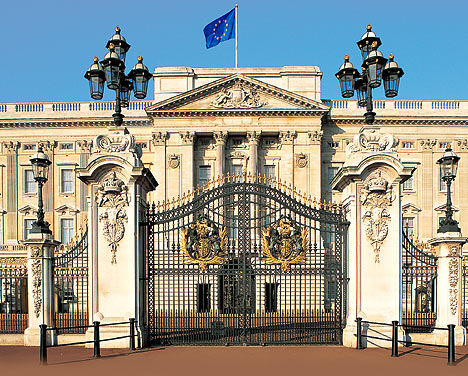
Perhaps not surpringly, the British royal family are a major tourist draw for travelers and backpackers of all ages visiting London, and her majesty Queen Elizabeth the second's current residence at Buckingham Palace is an essential place to visit when making your first trip to London. This fantastically grandeur palace has been the main home of the royals since 1837, and is now well known as the main HQ for the residing British monarchy and her family. Although entering the palace requires special invitation, it is worth going to visit it to see the beauty of the architecture of the building itself, and to soak up some quintessentially British culture and history. While you are at Buckingham Palace, you should also stick around to see the changing of the guard. This highly regimented and ceremonious tradition is quite something to behold.

If your visit to the palace has wet your appetite for more rich English history then you must surely take a trip in to Westminster to see the Houses of Parliament where the British government and members of parliament debated the ins and outs of British politics. This incredible architectural wonder lies on the north bank of London's famous river: the Thames and is truely an epic site to behold for any traveler. It encompasses both the house of commons and house of Lords which are central to Britain's political system. The famous Victoria Tower of the building houses Westminsters famous bells including the vast great bell (more commonly referred to as Big Ben) - weighing a massive 16 tons. The clock tower itself is said to be the largest free standing clock tower of its kind in the world and this year celebrated its 150th year in the month of May.

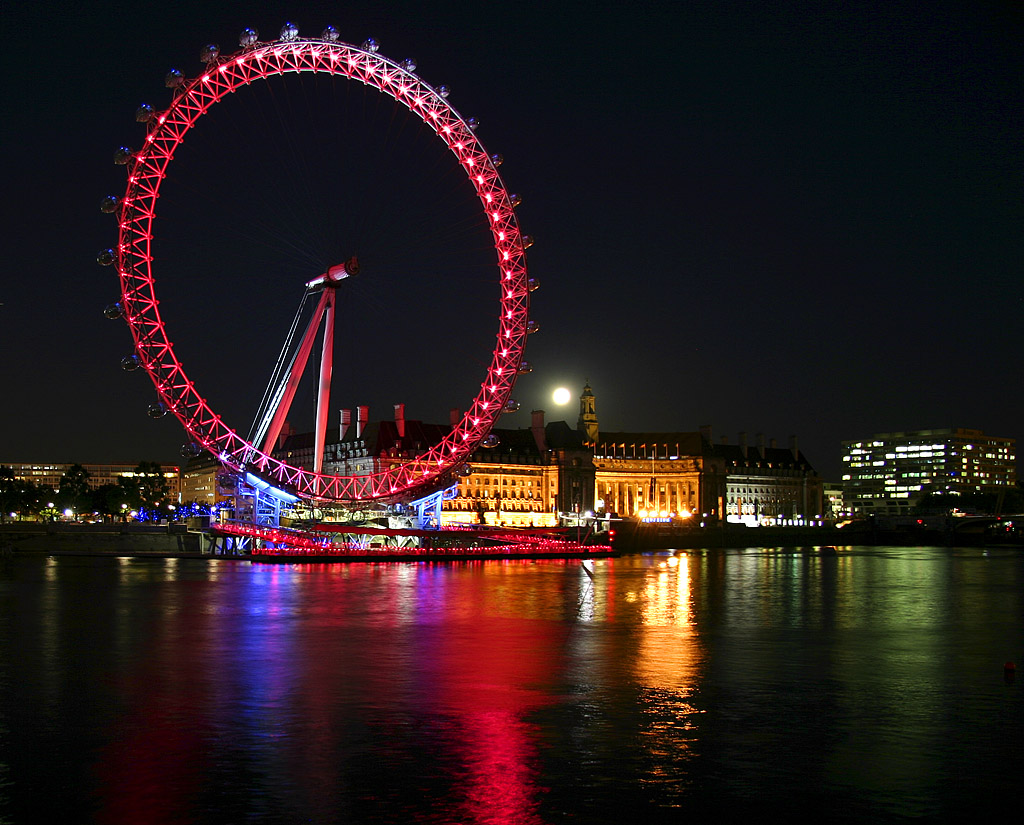
From the old to the new: while you are in the centre of Westminster you should take a short walk along the famous bridge to visit the London Eye. This huge wheel provides spectacular views across the famous city and can be a beautiful and romantic place to visit with your partner on a summer evening. Towering at 135 metres at its peak, the Eye lays claim to being the biggest ferris wheel in all of Europe and at the time it was built just before the turn of the millennium was in fact the tallest in the whole world. The London Eye has 32 passenger pods - 1 for each of London's Boroughs - and has an individual capacity of 25 people. As you can imagine, this is an extremely popular visitor attraction for travelers and UK tourists alike - so book early to avoid the disappointment of missing out.


Saturday, August 22, 2009

Rome show commemorates Palma Bucarelli

Rome's National Gallery of Modern Art (GNAM) is celebrating the 20th-century Italian art critic Palma Bucarelli. Bucarelli, who was GNAM superintendent for 34 years, turned the museum into an international attraction and helped popularize contemporary trends in Italy and abroad. The exhibition commemorates the centenary of her birth with over 150 display items.

The main attractions will be Italian 20th-century painting and sculpture masterpieces but the exhibition will also feature everyday mementos of Bucarelli's life, including photographs, music and evening dresses. Mariastella Margozzi, the exhibit's curator, highlighted her support for Italian art. ''She managed to select the best Italian art of the post-war period and bring it to public attention abroad, through collective exhibitions supported by the Foreign Ministry around the world,'' said Margozzi. But as well as taking Italian art abroad, she also promoted an interest in foreign art in Italy. ''She introduced the Italian public to the new, abstract informal art by highly prestigious European and American artists,'' said Margozzi. The curator cited exhibitions on Pablo Picasso (1953), Piet Mondrian (1956) and Jackson Pollock (1958) as particularly popular events organized by Bucarelli.

Bucarelli - who was once described as being ''as famous as a movie star and as talked about as a politician'' - was renowned for her love of controversy.

One move that created particular outrage was her decision to showcase some of the 90 tin cans in a 1961 series by Piero Manzoni, 'Artist's Shit'.

The cans, which purportedly contained Manzoni's excrement, even triggered a debate in the Italian parliament at the time - but the fact that can number 19 recently sold for 80,000 dollars are a sign of Bucarelli's accurate instinct.

Bucarelli acquired a number of now priceless works for the GNAM, including masterpieces by Gustav Klimt and Vincent Van Gogh.

Bucarelli also built up one of the best collections of Italian modern classics in the world, largely due to her networking skills and lasting friendships, which brought donations of works by names such as Lucio Fontana and Alberto Burri. GNAM Director Maria Vittoria Marini Clarelli said one of Bucarelli's most lasting achievements had been positioning the GNAM within an international network of museums that recognized the important of modernity. ''She had a museum-centric vision of the contemporary art system, a view that placed the museum at the core of art,'' she said. Palma Bucarelli: Il Museo Come Avanguardia (Palma Bucarelli: The Museum as Avant-Garde) runs at the GNAM until November 1.

ANSA photo: Bucarelli with sculptor Giacomo Manzu

For more about Italian Arts visit WebVisionItaly.com Italian Arts television channel.

To plan your vacation to Rome click for Rome holidays. Italian Tourism has the best Italy pre-cruise tour and Italy post-cruise tour Italy vacation packages. Italian tourism also specializes in Italy cruise tours from Rome. For a Italy cruise from Rome click Rome cruise.

Wednesday, August 19, 2009

Capucci "Fabric Sculpture" Exhibit at Odescalchi Castle


Roberto Capucci's legendary 'fabric sculptures', exploring the fashion maestro's creations in his 60-year career, will soon grace the halls of the lakeside Odescalchi Castle at Bracciano, a day trip from Rome in region of Lazio. The 15th century castle, which was location of the Tom Cruise wedding to Katie Holmes in 2006, is owned by one of Capucci's most loyal clients, Princess Maria Pace Odescalchi, from one of Italy's most ancient noble families.

The show, entitled 'Royal Elegance: Roberto Capucci at Castello Odescalchi at Bracciano', begins next month, September 17th, and will run through December 13. Fall travelers to Italy this is a great day trip from Rome.

The 66 outfits and 25 costume designs will be displayed in the castle's public halls, amid medieval armour and tapestries, in a ballroom-like scenario, the princess said at the event's presentation recently. All the creations, including seven bridal gowns and an outfit worn by Nobel medicine laureate Rita Levi Montalcini at the 1986 award ceremony, were personally chosen by the 79-year-old designer.

CAPUCCI'S CREATIONS HAVE APPEARED IN MANY MUSEUMS.

Many of the 66 outfits featured have appeared in galleries around the world.

The stylist's personal collection of 600 creations, 300 colour illustrations and 22,000 sketches are permanently housed in a new museum devoted entirely to his work in Florence, where his work first came to international notice at a fashion show in 1951.

Housed in the 17th-century complex of Villa Bardini, overlooking the Ponte Vecchio in the heart of Florence, the museum showcases the vast archive collected by the Roberto Capucci Foundation over more than half a century.

The Florence museum and itinerant shows, including at Moscow's prestigious Pushkin Museum, tell the story of the designer who elevated fashion into art.

In fact, from the time of his earliest creations, Capucci's origami-like designs have been closer to elaborate works of sculpture than clothing.

He has dressed film stars, first ladies and royalty over the decades but the wearers have usually showcased his creations rather than the other way round. Marilyn Monroe, Jacqueline Kennedy, Gloria Swanson and scores of noblewomen have all worn his outfits.

Capucci has cheerfully admitted that his works are not intended as everyday contributions to women's wardrobes.

''Frankly, I have never let myself be influenced by the idea of 'but when will I wear this, where will I go?','' he once remarked.

''There would be no history of fashion if people had thought like that in past centuries''.

Capucci was considered something of a wunderkind in the fashion world in the 1950s, breaking onto the international scene at the age of just 21 in 1951.

He had already opened an atelier on Rome's Via Sistina the previous year, in 1950, when his work was spotted by fashion entrepreneur Giovan Battista Giorgini, who invited him to display five outfits at a Florence show.

The other designers in the show demanded Capucci's elaborate creations be withdrawn, fearing their own work would be upstaged.

But when the press found out, they called for a separate showing of Capucci's designs, which were greeted with instant acclaim.

Since then, Capucci's work has appeared in galleries in Munich, London, Vienna, New York and various Italian cities.

For more about Italian Fashion click WebVisionItaly.com Italian Fashion television channel.

Monday, August 17, 2009

Venice Webcam Weddings from Rialto Bridge

Venice Webcam Weddings from Rialto Bridge coming soon so newlywed's friends and family worldwide may join couples tying the knot in Venice.

The municipal council has organized a system that allows civil ceremonies taking place in Venice city hall a few steps from the Rialto Bridge to be broadcast online at an extra charge. The service costs between 120 and 144 euros, depending on whether it is arranged in advance or on the day.

Venice is one of several Italian sites that has traditionally attracted couples from around the world. The general consensus among Italy wedding agencies and couples taking the plunge in Italy is that it is the nation's enduring romantic image which makes it such a popular destination.

Brimming over with fairytale villas and castles, a wedding in Italy or honeymoon in Italy offers couples lots of romantic destinations.

Italy wedding destination attracts about 6000 couples per year, placing Italy wedding destination third behind Hawaii and Australia on the global list of most popular wedding getaway destinations.

The Venice council initiative comes not long after Verona, home to literature's most famous lovers Romeo and Juliet, launched a scheme aimed at cashing in on the city's Shakespearean ties. Couples are now able to say their vows on the balcony of the house where Juliet is thought to have called to Romeo. The residence is believed to have once housed Juliet because it was the family home of the Cappello family, who, according to legend, were the Capulets of Shakespeare's play.

Verona Tourism Councillor Daniele Polato said the city wants to be a ''wedding capital to rival the world's other popular wedding spots.

''We'll be offering tourist packages, the whole shebang, just like Las Vegas does,'' he told local dailies.

''It's a way of using the city's artistic heritage to boost tourism''.

The privilege of getting hitched where Juliet was famously wooed by Romeo in Shakespeare's play will not come cheap, however.

The 'Wed Me In Verona' marriage license alone will cost Verona residents 600 euros, people living within the city catchment area 700, European Union citizens 800 and non-EU couples 1,000 euros.

This compares to the 50 euros required for a civil marriage certificate in Italy.

But Mayor Flavio Tosi stressed that there was no anti-foreigner bias at play.

''It costs extra because the administrative costs are higher,'' he explained.

For more about travel to Italy visit WebVisionItaly.com.

Saturday, August 15, 2009

Ancient Coins from Roman Empire Identified

The largest haul of ancient coins ever found has revealed new secrets thanks to the painstaking work of a team of Italian experts.

Specialists at the Italian National Research Council (CNR) have just concluded a two-year project involving the analysis and restoration of the cache of Roman coins, which was discovered by accident in Libya nearly 30 years ago. ''As well as the number of coins, this haul is exceptional as it sheds new light on so many areas,'' said Salvatore Garraffo of the CNR's Cultural Applied Technology Institute.

''It provides information about the history of the economy, about the circulation of currency in the area during the first half of the 4th century AD, about metallurgy and about monetary production at the time''.

The cache, which was unearthed during agricultural work outside the city of Misurata, Libya comprises 108,000 coins dating to between 294 and 333 AD.

The coins were found inside large amphorae and pitchers that had been buried near the remains of two buildings. Archaeologists believe these were probably part of a staging point and horse-changing complex used by the state-run courier and transportation service of the Roman Empire, the cursus publicus. Alternatively, the buildings may have been used by officials traveling on Empire business.

The coins were nummi, a collective name for different denominations of copper-alloy coins introduced by the emperor Diocletian at the end of the 3rd century AD. The studies by the CNR have revealed that the coins were generally made of a copper-tin-lead alloy. Some also contained a small quantity of silver, a fine layer of which was used to coat the surface of the coin. The tests have sought to identify the precise percentage of silver in the coins, as well as revealing the manufacturing methods used. This information can be used by archaeologists to reconstruct inflation levels and help them calculate periods of financial uncertainty or times in which there were currency crises. Diocletian's era is described as a time when the currency lost most of its value, as Diocletian introduced programs to preserve the Roman Empire, which was already in full collapse by the time he took rule. His programs eliminated personal freedoms and rendered the Roman citizens serfs.

The CNR has involved Italy's National Institute of Nuclear Physics in the testing process, using radioactive analysis to prevent the coins from being damaged by any invasive procedures. In addition to the testing and restoration, the coins have also been digitally cataloged to allow archaeologists in all parts of the world to continue learning from the cache.

In these days when economists are having a religious battle over hard money and fiat money, this research is even more interesting, as Italy's history from the Roman Republic, to Florence in the Renaissance and Venice's Maritime Republic, coinage and currency value and inflation is an integral part of a region's rise and eventual fall. Currency devaluation, inflation, and government treating its citizens like serfs certainly led to the fall of the Roman Empire. The Empire began after the Roman Republic in 44 B.C. By 250 AD the coinage was printed with a ratio of silver that was noticeably less than the prior 300 years manifesting a debasement and decline in the Empire due to it hitting a financial wall.

For more information about Italy travel follow @ItalyTravel on Twitter and visit WebVisionItaly.com Italy videos.

Thursday, August 13, 2009

Ducat Replaces Euro in Puglia

Celenza Valforte, Puglia celebrated today The Ducat, Europe's common currency for close to one thousand years up until World War I.

The euro is being temporarily shelved for one day, with stalls, bars and restaurants accepting only the ducat as Celenza Valforte residents celebrate their past. Visitors to the town will be able to exchange their euros to ducats at one of the town's five medieval gates, three of which have been specially reconstructed for the event.

The initiative is part of a daylong event exploring the history of the town that aims to transport residents and visitors into a different world. Although people have lived in the area since prehistoric times, the town's current layout dates back to the Middle Ages. The celebrations encompass the many changes it has gone through since then: its years under Spanish domination in the 1500s, as part of the Austrian Empire in the 1700s and later under French rule towards the end of the 18th century, and eventually under the Bourbons in the 1800s. The monuments and architecture of the various eras are spotlighted in tours of the town and the coins are part of a broader initiative to recreate life as it was.

All the shops are closed for the day and the electric lighting around the town switched off, with the historic centre illuminated by burning torches when evening arrives. Over 100 of the town's residents have been officially tasked with helping recreate a historic atmosphere kitted out as knights, ladies, soldiers, brigands and traders, while medieval guards welcome new arrivals at the gates. From early evening, street artists, jugglers, fire-eaters, troubadours and jongleurs will wander the streets, while Medieval and Renaissance songs and music will be performed in different parts of the town.

The streets of Celenza Valfortore have been decked out in banners and heraldic signs of its various rulers from past centuries. The ducat, which was issued in both gold and silver, was Europe's common trade currency for centuries until World War I.

It is thought to have been minted for the first time in 1140 under Roger II of Sicily and soon spread across Europe, particularly after receiving official sanction in the mid-1500s.

The Celenza Valforte celebrations, Vivi Il Borgo! (Long Live The Town!), are an annual event but this is the first year the ducat has been used as currency.

For more about Puglia visit WebVisionItaly.com Puglia travel television channel.

Monday, August 10, 2009

Excursion South Padre Island Texas

Excursion South Padre Island Texas
spectacular view of Excursion South Padre Island Texas  from above

Excursion South Padre Island Texas

Excursion South Padre Island Texas
spectacular view of Excursion South Padre Island Texas  from above

Sunday, August 9, 2009

St. Peter's Basilica, Vatican City: Entry Restrictions

Entry to the St. Peter's Basilica in the Vatican City is free. There are some restrictions to entry, including a strictly enforced dress code and banned items. All visitors must pass through the security gates where any items you may be carrying will be x-rayed. Anyone with bare shoulders or over-exposed legs will be turned away at the steps leading to the entrance to the Basilica.


St. Peter's Basilica, Vatican City: Entry Restrictions

Entry to the St. Peter's Basilica in the Vatican City is free. There are some restrictions to entry, including a strictly enforced dress code and banned items. All visitors must pass through the security gates where any items you may be carrying will be x-rayed. Anyone with bare shoulders or over-exposed legs will be turned away at the steps leading to the entrance to the Basilica.


Saturday, August 8, 2009

Deredia in Rome

Rome's two most famous archaeological sites are for the first time playing host to a contemporary art exhibition, with a series of large-scale sculptures by Costa Rican artist Jorge Jimenez Deredia.

A number of massive bronze and marble statues are on show in front of the Colosseum and in the Roman Forum as part of a wider display of Deredia's work around the Italian capital.

Deredia's sculptures have been erected in several key sites, including Piazza Barberini, San Lorenzo in Lucina and in the courtyards of Rome's art museums, such as Palazzo Massimo and Palazzo Altemps.

There are also a number of smaller works by the artist at the Palazzo delle Esposizioni, along with several of Deredia's bronze pieces from his renowned Genesis series.

The Forum is hosting 17 separate sculpture groups located at sites along the Via Sacra. The idea of showing Deredia's statues in the Forum and the Colosseum was first raised two years ago but met with resistance in some quarters among those who felt the contemporary nature of the work was inappropriate for the ancient sites. But thanks to firm backing from Rome's municipal council, centre-left former Rome mayor Walter Veltroni and the current centre-right mayor Gianni Alemanno, the initiative has finally come to fruition. Discussing the idea at its inauguration, Culture Undersecretary Francesco Maria Giro said the contrast between old and new was a crucial element of the scheme.

''This is a project that unites the new, which is the future, with the old, which never dies,'' he said. As well as marking a first for Rome's archaeological sites, the exhibition also offers a preview of a new international initiative by Deredia entitled La Ruta de la Paz (The Path of Peace).

The Ruta de la Paz comprises nine new sculpture groups that will eventually be located in nine different countries across the Americas, from Canada down to the Tierra del Fuego, with stops en route in the US, Mexico, Costa Rica, Colombia, Peru and Chile. The idea is to pull together peoples, legends, myths, symbols and traditions from an array of different backgrounds into a single, overarching project. The Rome exhibit features several of these pieces, while the Genesis group at the Palazzo delle Esposizioni has been described as ''the heart'' of the Ruta de la Paz. Deredia's art will be on display around the Italian capital until November 30.